+86 21 61767181
info@highspeeddoor.cn
 English
 Español
 Русский

In advanced manufacturing sectors such as pharmaceuticals, biotechnology, and semiconductor fabrication, maintaining cleanroom air integrity is a constant operational challenge. Even the most sophisticated High-Efficiency Particulate Air (HEPA) filtration systems can be compromised if the physical barriers separating controlled environments from the outside world fail.
Among these barriers, the rapid-acting PVC high-speed door plays a pivotal role. Today, the integration of speed-optimized PVC door drive systems powered by advanced servo technology has emerged as the gold standard for shielding cleanroom environments against airborne contamination and pressure loss.
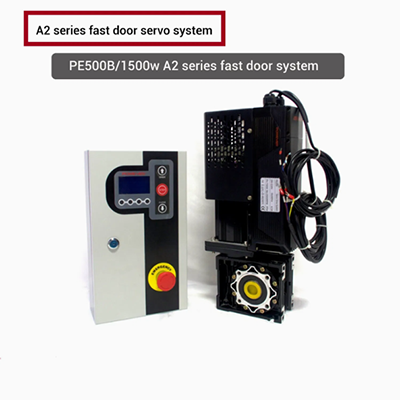
The primary threat to a cleanroom occurs when a doorway opens, creating an opportunity for cross-contamination. Traditional industrial doors move slowly, leaving the pristine environment exposed to ambient air for extended periods.
The Speed Advantage: Optimized drive systems utilize high-performance servo motors that open and close PVC curtains at speeds exceeding 2.0 meters per second.
The Result: By compressing the entire operational cycle—opening, waiting, and closing—into less than four seconds, the "exposure window" is minimized. This drastic reduction in time prevents turbulent air currents from carrying dust, micro-particles, or microbes into the sterile zone.
Cleanrooms rely on positive differential pressure to ensure that whenever a door opens, air flows out of the clean space, preventing outside air from rushing in. However, a poorly regulated door movement can disrupt this delicate balance.
S-Curve Control: Speed-optimized drives do not simply yank the door open. They use advanced microprocessors to execute a smooth "S-Curve" acceleration and deceleration profile.
Eliminating Turbulence: Traditional asynchronous motors start with a sudden jolt, creating a localized vacuum or "chimney effect" that can pull unfiltered air through the edges. A smooth, servo-driven lift maintains a stable laminar airflow, ensuring that positive pressure continues to act as a natural shield.
Speed is useless without precision. In a cleanroom, a door that fails to close completely by even a few millimeters creates a permanent leak that destroys pressure gradients and forces filtration systems to work overtime.
Precision Positioning: Modern cleanroom drive systems reject mechanical limit switches, which can slip or wear down. Instead, they incorporate built-in Absolute Encoders.
Tight Sealing: The absolute encoder reads the exact positioning of the door down to the millimeter. This guarantees that the door achieves a flawless, airtight seal at the floor and within the side tracks on every single cycle, even after a sudden power reset.
The following table contrasts the capabilities of standard motor configurations against specialized, speed-optimized drive systems within controlled cleanroom environments.
|
Performance Metric |
Standard Induction Drive System |
Speed-Optimized Servo Drive System |
Cleanroom Integrity Impact |
|
Motion Profile |
Sudden On/Off jolt |
Intelligent "S-Curve" ramping |
High: Eliminates air turbulence and localized pressure drops. |
|
Positioning Method |
Mechanical limits (Prone to drift) |
Digital Absolute Encoder |
Very High: Ensures a tight, repeatable perimeter seal. |
|
Particle Generation |
High (Friction from chains/brakes) |
Zero (Direct-drive, enclosed gearbox) |
Critical: Prevents the drive itself from contaminating the zone. |
|
Smart Diagnostics |
None / Basic light indicators |
Digital display (Bilingual fault logs) |
High: Accelerates troubleshooting to prevent prolonged downtime. |
In a cleanroom, touch-free operation is mandatory to prevent cross-contamination from human hands. Speed-optimized drives are engineered to integrate seamlessly with high-end, touchless activation sensors.
Advanced Radars & Light Curtains: Systems configured with specialized sensors (such as BEA) map approaching automated guided vehicles (AGVs) or personnel.
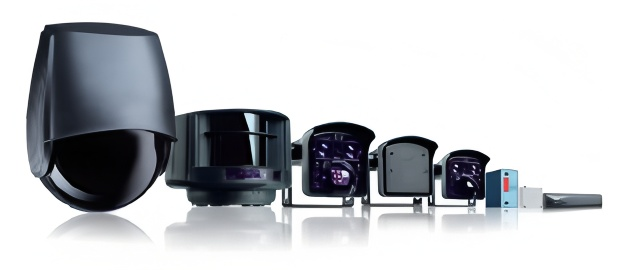
Instantaneous Response: Because the servo drive features near-zero latency, the door triggers exactly when needed and closes immediately after passage. This frictionless synergy prevents accidental panel collisions, eliminating the risk of door damage that could compromise the cleanroom's airtight shell.
For high-tech manufacturing facilities, an industrial door is no longer just a physical barrier—it is an active component of environmental control. Transitioning to a speed-optimized PVC door drive system allows facilities to lock in their pressure differentials, safeguard their product yields, and dramatically lower the energy load on cleanroom HEPA filtration networks. Speed, precision, and smart control are the ultimate shields for modern cleanroom integrity.
Company Name:Hitch (Shanghai) Automation Co.,Ltd.
Name: Lucky Gao
Mobile:15901664615
Tel:+86 21 61767181
Whatsapp:+8615901664615
Email:info@highspeeddoor.cn
Email:kevin.jiang@powever.com.cn
Add:Room 301-302, Building 1, No. 1355, Chengbei Road, Jiading District, Shanghai
Post code:201800