+86 21 61767181
info@highspeeddoor.cn
 English
 Español
 Русский

In the fast-paced ecosystem of modern logistics hubs, loading docks and internal corridors operate under non-stop pressure. Forklifts, automated guided vehicles (AGVs), and personnel move continuously to meet tight delivery schedules. In these high-traffic zones, the industrial door is the most vulnerable asset.
Forklift collisions are a leading cause of unscheduled facility downtime, resulting in expensive door panel repairs, snapped cables, and halted workflows. To mitigate this risk, forward-thinking operations are moving beyond basic safety measures. The industry's open secret to achieving near-zero accident rates lies in the seamless integration of premium BEA and CEDES sensors into high-speed door control networks.
1. BEA Sensors: Predictive Activation and Intelligent Traffic Filtering
Traditional motion sensors are reactive and unselective. They trigger the door for any movement nearby, causing unnecessary open-and-close cycles that waste energy and increase mechanical wear.
Directional Detection: High-end BEA radar sensors utilize advanced microwave and laser technology to track the exact direction of motion. The sensor ignores traffic moving away from or parallel to the door (cross-traffic rejection) and only opens when a vehicle is directly approaching the opening.
Early Activation Shield: By projecting a customized detection field far ahead of the threshold, BEA sensors allow fast-moving forklifts to pass through without slowing down, matching the door’s rapid opening curve perfectly and preventing top-panel clips.
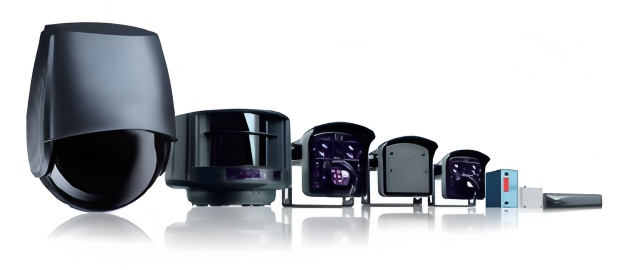
2. CEDES Light Curtains: The Ultimate Vertical Protection Barrier
While radar sensors handle predictive opening, guarding the physical closing zone requires absolute precision. This is where CEDES infrared light curtains redefine industrial gate safety.
Full-Height Grid Detection: Traditional photo-eyes project a single infrared beam across the floor, leaving massive blind spots. CEDES light curtains project a dense, multi-beam vertical grid directly inside the door track, creating an invisible safety wall from the floor up to the header.
Non-Contact Reversal: If a pedestrian steps into the doorway or a forklift tongue extends into the plane while the door is closing, the grid is interrupted instantly. The system triggers a non-contact reversal, stopping and reversing the curtain before any physical contact occurs.
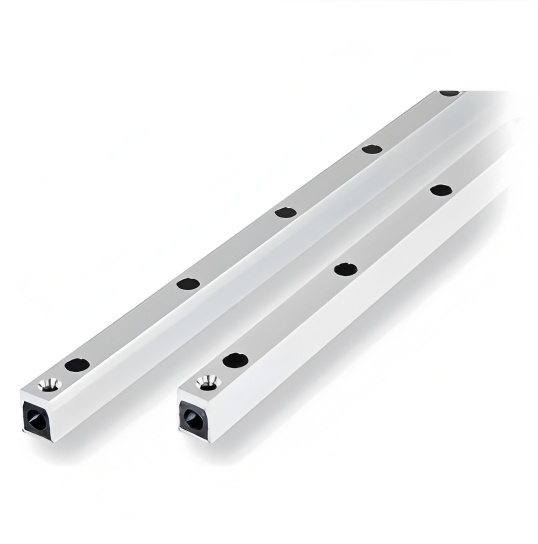
3. Comparative Anatomy: Standard Safety Edges vs. Premium Integrated Suites The following table illustrates how shifting from reactive hardware to an integrated sensor suite fundamentally alters facility safety and maintenance overhead.
|
Operational Metric |
Traditional Contact Safety Edge |
Integrated BEA & CEDES Sensor Suite |
|
Collision Detection Principle |
Reactive (Requires physical impact to trigger reversal) |
Predictive & Proactive |
|
Detection Zone Coverage |
Single point of contact at the bottom profile |
Full-height vertical grid with extended radar field |
|
Traffic Flow Intelligence |
None (Responds only to direct pressure) |
High |
|
Mechanical Wear & Lifespan |
Low (Subject to continuous physical impacts) |
Extremely High |
Hardware superiority means nothing without a fast control loop. Premium BEA and CEDES sensors are linked directly to intelligent servo door control systems capable of real-time diagnostics. When the CEDES light curtain detects an interruption, it bypasses standard relay delays and communicates directly with the servo drive's digital microprocessor. The drive applies smooth electronic braking rather than a violent mechanical jerk, preserving the life of the motor gearbox. Furthermore, the smart control box features a bilingual digital display that constantly monitors the sensor health. If a sensor lens becomes obscured by dust, the display logs a specific alert, allowing on-site maintenance crews to wipe it down before it causes an operational stoppage.
Company Name:Hitch (Shanghai) Automation Co.,Ltd.
Name: Lucky Gao
Mobile:15901664615
Tel:+86 21 61767181
Whatsapp:+8615901664615
Email:info@highspeeddoor.cn
Email:kevin.jiang@powever.com.cn
Add:Room 301-302, Building 1, No. 1355, Chengbei Road, Jiading District, Shanghai
Post code:201800